

In short
- Stretch marks are scars that form when skin stretches or shrinks fast: in pregnancy, puberty or with weight changes. They are harmless.
- New marks are pink, red or purple; old ones are white and silvery. New ones are easier to fade.
- Nothing removes stretch marks completely. Dermatologist treatments make them less visible, and time lightens them without any treatment.
- Cocoa butter, olive oil and almond oil did not reduce stretch marks in studies. The best evidence is for retinoids and hyaluronic acid on early marks.
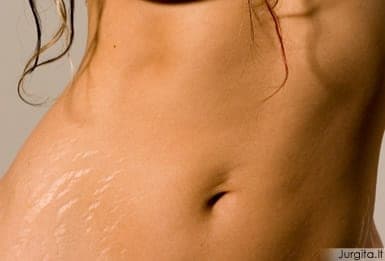
Stretch marks are pink, reddish-blue or pale streaks on the skin. They are brighter at first and fade with time. They appear where skin is stretched: the stomach, breasts, buttocks, thighs, waist and hips. Men get them as well as women.
Doctors agree that this change cannot really be erased, but making stretch marks less noticeable, on your own or with medical help, is realistic. What matters is knowing what works and what is not worth the money.
What stretch marks are and why they appear
A stretch mark is a scar. When skin stretches or shrinks faster than it can adapt, the collagen and elastin fibres in its inner layer tear. As the skin heals, a streak is left. Whether you get them depends a great deal on heredity and hormones, which is why two people in the same situation react differently.
- pregnancy, especially the last months;
- puberty, when the body grows quickly;
- rapid weight gain or loss;
- fast muscle gain in the gym;
- heredity: if your mother has them, you are more likely to;
- long-term corticosteroids (creams or tablets) and some hormonal conditions.
In the teens stretch marks are very common, in girls and boys alike: on hips, thighs and chest, and in boys on the back. They are a sign of growth, not of illness.
Red and white stretch marks
| New marks | Old marks | |
|---|---|---|
| Colour | Pink, red, purple; brown on darker skin | White, silvery, lighter than the skin |
| Surface | Slightly raised, may itch | Flat or slightly sunken |
| When | The first months | After six months and later |
| Response to treatment | Better: blood flow is still active | Harder: procedures at a dermatologist remain |
Hence the most important advice: act while the marks are new and still red or brown.
Can stretch marks be prevented?
There is no guaranteed way, but the risk can be lowered: avoid sudden weight swings and strict diets, gain weight steadily in pregnancy, build training loads gradually and keep skin moisturised.
What do studies say? The most popular remedies, cocoa butter, olive oil, almond oil and vitamin E, did not prevent stretch marks in trials. There is a little more evidence for products with centella asiatica and hyaluronic acid. Daily moisturising and massage still ease itching and tightness, so they are worth keeping.
Stretch mark creams and oils: what works
| Product | What we know |
|---|---|
| Retinoids (tretinoin) | A prescription cream that can fade new marks. Not to be used in pregnancy or while breastfeeding. |
| Hyaluronic acid | Some studies show early marks become less visible when it is applied from the start. |
| Centella asiatica | A common ingredient in stretch mark creams; evidence exists but is limited. |
| Cocoa butter, olive oil, almond oil, vitamin E | Did not reduce stretch marks in studies. Fine as moisturisers. |
| Self-tanner | Does not remove marks but evens out colour. A real tan makes them stand out, because they do not tan. |
Whatever you choose, three rules apply: start as early as you can, apply daily and massage it in, and expect results in months, not in a week.
Treatments at a dermatologist
When creams are not enough, procedures remain. None removes stretch marks completely, but they can even out colour and texture. Several sessions are usually needed.
- Laser. Some lasers reduce the redness of new marks, others stimulate collagen in old ones.
- Microneedling. Tiny punctures prompt the skin to produce collagen.
- Microdermabrasion and chemical peels. Remove the surface layer. Peels must be superficial, because skin over a stretch mark is thin.
- Radiofrequency and ultrasound. Heat the deeper layers and stimulate collagen.
Be careful with ozone therapy, mesotherapy and vacuum massage sold for stretch marks: evidence is thin, and claims about "removing toxins" have no scientific basis. Ask a dermatologist before paying for a course.
When to show stretch marks to a doctor
Stretch marks themselves are harmless. See a doctor if they appear suddenly with no obvious cause, are wide and dark purple, and come with a rounder face, weight gain around the middle or easy bruising. That can point to a hormonal disorder such as Cushing's syndrome. Ask too if marks appeared after long use of a corticosteroid cream.
Stretch marks and fashion: what the camera sees
At a model agency we see stretch marks every day: most tall girls and boys have had them since their teens, because they grew fast. They do not stand in the way of a career. On shoots they are covered by make-up and light, and more and more brands no longer hide or retouch them.
If they bother you, simple things help: self-tanner evens the colour, body make-up covers them for an evening, and the right cut of swimsuit or dress draws the eye elsewhere. Choosing silhouettes is part of an image consultation, and a healthy view of the body in fashion is something we talk about in model training.
Read next: how to choose a sunscreen and cellulite, and what really helps. Swimwear sizes are in the size guide.
Frequently asked questions
Do stretch marks go away on their own?
Not completely, but within six months to a year they turn from red to pale and become far less visible.
How do you get rid of stretch marks at home?
You cannot remove them at home, but you can fade new ones: apply a product with hyaluronic acid or centella asiatica daily and massage it in. Creams do little for old white marks.
Does stretch mark cream work in pregnancy?
It will not prevent marks if your skin is prone to them, but moisturising eases itching and tightness. Products with retinoids must not be used in pregnancy or while breastfeeding.
Do stretch marks tan?
No. They are scar tissue and do not tan, so they show more on tanned skin. Self-tanner evens the colour.
Can laser remove stretch marks?
Laser makes them less visible but does not remove them. New marks respond best, and several sessions are usually needed.
Can working out cause stretch marks?
Yes, when muscles grow quickly, most often on shoulders, upper arms and thighs. Building load gradually lowers the risk.
Sources
- American Academy of Dermatology, Stretch marks: why they appear and how to get rid of them.
- NHS, Stretch marks.
- NHS, Cushing's syndrome.
This story is for information and does not replace a doctor's advice.

Comments (0)
No comments yet. Be the first!
Only logged-in users can comment. Register — and you'll be able to share your thoughts on this article.
Register