

In short
- Cellulite is not a disease. Between 80 and 90% of women have it after puberty, slim and athletic women included.
- It comes from the structure of the skin: fat cells push up between bands of connective tissue that pull the skin down. Hormones, genes and age decide it, not "toxins".
- Nothing removes cellulite completely and for good. What helps most is stronger muscles, a stable weight and a few procedures carried out by dermatologists.
- Creams with caffeine or retinol and massage give a small, temporary effect that has to be kept up.
Cellulite bothers a great many women. It is not an illness, yet because of it people avoid places where they have to undress: pools, water parks, saunas. "Orange peel" skin shows most on thighs, buttocks and stomach, sometimes on the upper arms. Mature women and slim young girls complain of it alike, so the idea that it comes only from excess weight is wrong.
What cellulite is
Under the skin lies a layer of fat, crossed by bands of connective tissue that run from the skin to the muscle. In women they run vertically, like the stitching of a mattress. When fat cells push upwards and the bands pull the skin down, dimples and bumps appear on the surface. In men the bands criss-cross and the skin is thicker, which is why men rarely have cellulite.
The word itself took off in the late 1960s, when Vogue named cellulite as a flaw. Before that it was simply a woman's skin.
What causes cellulite
- Hormones. Oestrogen decides where fat is stored and how connective tissue is built. Cellulite therefore appears after puberty and can become more visible in pregnancy or at menopause.
- Heredity. If your mother has it, you probably will too.
- Age. Skin thins and loses elasticity, so unevenness shows more.
- Weight swings. More fat means more visible bumps, but after sudden weight loss skin slackens and cellulite can show even more.
- Little movement. Weak muscles give the skin no support from beneath.
Smoking does harm the skin's collagen and circulation, and movement does help. There is no evidence, however, that sparkling water, food additives, tight jeans or high heels cause cellulite, and there are no "toxins" to flush out of it.
The grades of cellulite
| Grade | What it looks like | What to expect |
|---|---|---|
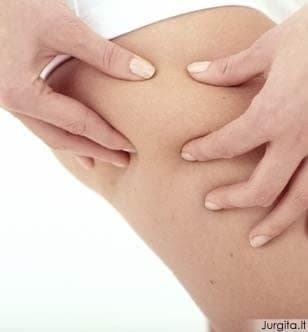
| I | Skin looks smooth; dimples show only when you pinch it | Movement and skin care are enough |
| II | Bumps show when standing or tensing muscles and vanish lying down | It will not go completely, but exercise and treatments can reduce it a good deal |
| III | Visible both standing and lying down; skin is slack | It takes time, and a clear change needs a dermatologist's procedures |
What helps: exercise and weight
Exercise does not cure cellulite, but it makes it less visible. Strong glutes and thighs even out the surface from below, and a thinner layer of fat presses less on the skin.
- Strength work for legs and glutes two or three times a week: squats, lunges, hip bridges, leg presses.
- Daily movement: brisk walking, stairs, cycling, swimming.
- A stable weight. Strict diets and weight jumps only wear the skin out. You cannot starve cellulite away.
Cellulite creams, scrubs and massage
| Product or method | What we know |
|---|---|
| Creams with caffeine | Temporarily tighten tissue, so skin looks smoother. The effect goes when you stop. |
| Creams with 0.3% retinol | May thicken the skin so dimples show less. Judge after six months at the earliest. |
| Scrubs, dry brushing | Improve circulation and the look of skin briefly. They do not "break down" fat. |
| Vacuum and machine massage | A temporary effect that needs regular sessions. |
| Contrast showers, sauna, wraps | Pleasant; skin looks firmer for a while. The structure does not change. |
| Supplements | No evidence that they reduce cellulite. |
If you use a cream, pair it with massage and exercise: those two do most of the work.
Treatments at a dermatologist
- Subcision. A fine needle or a dedicated device cuts the bands that pull the skin down. Results can last two years and more.
- Laser treatment. A laser fibre placed under the skin releases the bands and thickens the skin. The effect can last a year or longer.
- Acoustic wave therapy. Several sessions; results are more modest, but it is non-invasive.
- Radiofrequency. Heats tissue and smooths skin temporarily; the effect has to be maintained.
Liposuction is not a cellulite treatment and can make it more obvious, and dermatologists do not recommend mesotherapy or fat freezing for cellulite. Before paying for a course, ask how many sessions are needed, how long the result lasts and who performs the procedure.
The quick fix: how to hide it
Unevenness shows less on darker skin, so self-tanner or body make-up is the fastest route before the beach or a party. Sunbathing is not: it thins the skin, and in time cellulite shows more. See how to choose a sunscreen.
Cellulite and the fashion world
From inside a model agency we can confirm it: tall, slim, athletic girls have cellulite too. You do not see it in magazines because of light, posing and retouching, not because it is absent. More and more swimwear brands no longer smooth skin in their campaigns.
If it bothers you, three things help more than a cream: strong muscles, the right cut and a calmer view. Which swimsuits, shorts and dresses suit you is worked out in an image consultation, and a healthy attitude to the body in fashion is part of model training. The same goes for stretch marks: it is normal skin.
Frequently asked questions
Is cellulite a disease?
No. It is a normal feature of how women's skin and the tissue beneath it are built. It does no harm to health.
Can you get rid of cellulite completely?
No. It can be reduced and made less visible, but nothing removes it for good.
Why do thin women have cellulite?
Because it depends on connective tissue, hormones and heredity rather than on the amount of fat. Every woman has a layer of fat under the skin.
Do cellulite creams work?
Creams with caffeine or retinol give a small effect that lasts only with constant use. They work best with massage and exercise.
Which exercises help with cellulite?
Strength exercises for glutes and thighs: squats, lunges, hip bridges. Stronger muscles smooth the surface from beneath.
Does drinking water or dieting remove cellulite?
No, but a balanced diet helps keep weight stable, which makes cellulite less visible. "Anti-cellulite" diets have no evidence behind them.
Sources
- American Academy of Dermatology, Cellulite treatments: what really works?
- Cleveland Clinic, Cellulite.
This story is for information and does not replace a doctor's advice.

Comments (0)
No comments yet. Be the first!
Only logged-in users can comment. Register — and you'll be able to share your thoughts on this article.
Register