
Wool fabric
Sheep's fleece. Shorn fleece is scoured, carded and spun. The crimped fibre traps air – that's why it's warm.
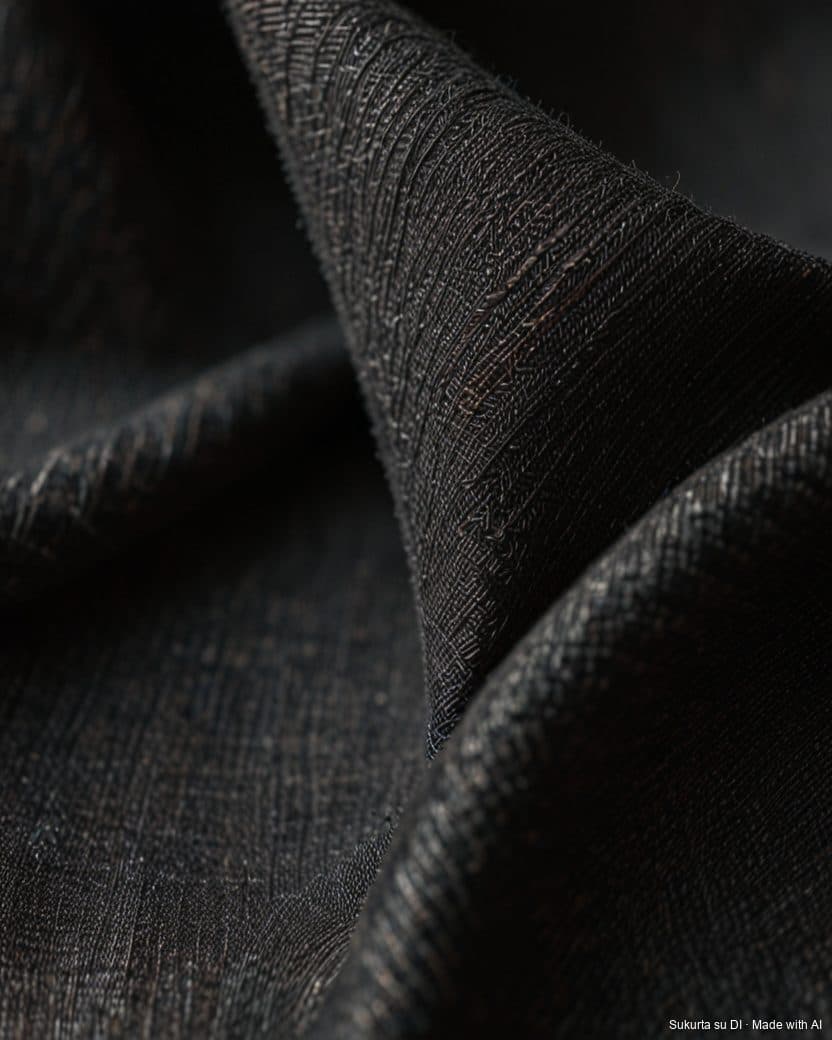
How it feels
Warm and springy, can feel a little scratchy.
Season: Autumn and winter – it keeps you warm.
What it's used for
Coats, suits, knitwear, scarves.
A wool coat or suit is a ten-year investment. Fine wool works in summer suits too ('tropical wool').
Pros
- Stays warm even when damp
- Naturally resists odour and creases
Cons
- Felts and shrinks with heat and friction
- Can itch on sensitive skin
Care: a typical label
Always follow your own garment's label – blends and finishes change the care.
How it's constructed
Twill weave. Threads pass over two or more crosswise threads, stepping along each row – making diagonal lines. Denser, drapier, hard-wearing and good at hiding marks.
A little history
Sheep were domesticated for wool over 10,000 years ago. In the Middle Ages the English and Scottish wool trade was Europe's biggest business.
How to recognise it
Animal fibres feel warm and springy – they bounce back when crushed. They burn smelling of hair and leave brittle black ash.
Sustainability
Biodegradable and long-lasting. Animal welfare matters: look for RWS (wool), the Good Cashmere Standard, and non-mulesed labels.
When buying
Rub the knit – if it pills at once, the fibres are short. '100%' or a high share of the natural fibre is warmer than acrylic blends.
Frequently asked
01What is wool?
Sheep's fleece. Shorn fleece is scoured, carded and spun. The crimped fibre traps air – that's why it's warm.
02Is wool a natural fabric?
Yes – a natural animal fibre.
03Does wool shrink?
Yes, for good: heat, temperature shocks and friction don't just shrink wool – they felt it. Cool water, a gentle cycle and drying flat only.
04Is wool breathable?
Yes: wool lets air through and absorbs moisture – cool in the heat.