

In short
- The dress code on an invitation tells you how formal the hosts expect you to be. For men there are six common levels: casual, smart casual, business casual, business formal, black tie and white tie.
- When in doubt, dress one step more formal: a jacket is easier to take off than to conjure up.
- Fit matters more than price: the shoulders, the sleeve length and the trouser length.
- Black tie means a dinner jacket (tuxedo) with a black bow tie; white tie means a tailcoat with a white one. A dark suit and tie is neither.
Meetings, job interviews and celebrations ask for more than good manners; they ask for the right clothes. An invitation or an employer's e-mail usually sums it up in two words, and those two words raise the questions: does smart casual mean jeans, can you wear a black suit to black tie, is a tie still required?
This is the dress code for men in short. Each code has its own page, for women and for men, in our dress code guide.
Men's dress codes: the whole scale in one table
| Code | What to wear | Where you meet it |
|---|---|---|
| White tie | Black tailcoat, white piqué waistcoat, white bow tie, patent shoes | State dinners, some balls |
| Morning dress | Morning coat, striped trousers, waistcoat, tie | Formal daytime weddings, the races |
| Black tie | Dinner jacket, white shirt, black bow tie, cummerbund or waistcoat | Evening galas, awards, opera premieres |
| Black tie optional | Dinner jacket, or a dark suit with a tie | Evening weddings, charity dinners |
| Cocktail attire | Dark suit, shirt, tie or pocket square | Receptions, weddings, company parties |
| Business formal | Navy or charcoal suit, tie, oxfords | Negotiations, court, job interviews |
| Business casual | Blazer or knit, chinos, shirt without a tie | The everyday office, conferences |
| Smart casual | Dark jeans or chinos, shirt or polo, neat leather shoes | Dinners, birthdays, creative offices |
| Casual | Tidy everyday clothes | Informal get-togethers |
Business formal: a suit that works
In a formal setting a well-cut suit is still required: a fitted long-sleeved shirt under the jacket, a classic tie, a belt and well-kept shoes. These rules do not change.
- Colour. Navy and charcoal come first. A black suit is traditionally evening and mourning wear, so it is not the first choice for negotiations or an interview.
- Jacket. The shoulders decide everything: the seam should end where your shoulder ends. The bottom button always stays undone.
- Sleeves. About a centimetre (half an inch) of shirt cuff should show.
- Trousers. Too short or too long is the usual complaint. They should rest lightly on the shoe with one small break.
- Tie. Tied, it should reach the belt buckle. Plain, striped or small-patterned suits business.
- Shoes and belt. Black or dark brown leather, kept clean. The belt matches the shoes and has a plain buckle.
- Socks. Matched to the trousers, not to the tie, and long enough that no leg shows when you sit.
- Details. A pen goes in the inside jacket pocket, not the shirt pocket. A tidy haircut and clean nails are noticed before a watch is.
The cloth decides how the suit looks after a day's work: wool creases less than linen or cotton. Comparisons are in the fabric guide, and your jacket and shirt size in the men's clothing size chart, with EU, UK and US conversions.
Business casual: relaxed, not weekend
More and more companies let staff dress down, and in many offices business casual is now the daily norm rather than a Friday exception. It stays neat: no loud colours and no sportswear.
- Chinos or wool trousers in darker shades.
- An oxford shirt, a fine V-neck or crew-neck knit, a roll-neck, a cardigan.
- An unstructured blazer when a meeting is on the calendar.
- Loafers, derbies, suede shoes. A tie is optional.
Smart casual: the most misunderstood code
Smart casual is the most searched dress code because its limits are vague. The simplest formula: take a casual outfit and swap one piece for something sharper. Dark jeans without rips and a shirt. Chinos and a knit. A T-shirt under a blazer with clean leather trainers.
What smart casual is not: a tracksuit, shorts, flip-flops, slogan T-shirts. When an invitation says "smart", the hosts expect an effort.
Cocktail attire
Cocktail parties are usually more formal than daytime gatherings; how much more depends on the place and the hour. The safe choice is a dark suit and a white or light blue shirt. At a non-work event a pocket square can stand in for the tie. In summer a lighter suit is fine.
Black tie and white tie
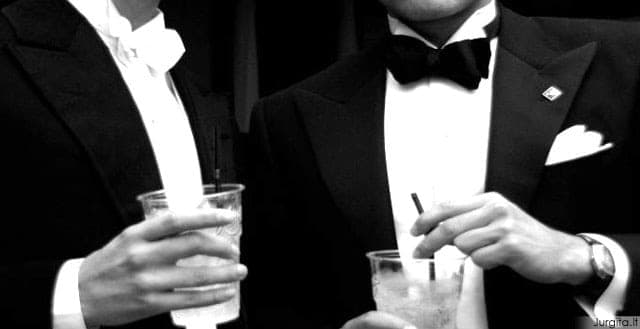
Black tie calls for a dinner jacket, a tuxedo in American English: a black or midnight blue jacket with silk lapels, trousers with a silk stripe, a white shirt, a black self-tied bow tie and a cummerbund or waistcoat. Shoes are black patent or highly polished oxfords. Cufflinks belong here. Most formal evening events after six where women wear long gowns expect this code.
In warm climates and at summer events a white or ivory dinner jacket may replace the black one, with the same black trousers.
White tie is the most formal evening code: a black tailcoat, a stiff-fronted white shirt, a white piqué waistcoat and white bow tie, black trousers with two silk stripes and black patent shoes. White gloves are optional.
Morning dress is the daytime equivalent: a morning coat, a grey or buff waistcoat, striped trousers and a tie. It will be stated on the invitation.
What to wear to a specific occasion
- A wedding. With no code given, a lighter suit by day and a dark one in the evening: what to wear to a wedding.
- A job interview. One step more formal than the company's everyday: what to wear to a job interview.
- Theatre and opera. A suit for premieres, smart casual on other nights: what to wear to the theatre.
- The office Christmas party. What to wear to a Christmas party.
If you are unsure, ask the hosts or another guest. And remember the old rule: fewer details beat too many.
When the rules are not enough
A table tells you what to wear, not which shade of blue suits your face or what jacket length works for your height. That is decided person by person: in an image consultation we work out your colour type and silhouettes and build a base wardrobe that covers both the working week and the celebrations. It suits men as well as women.
Frequently asked questions
What does smart casual mean for men?
Neat casual clothes with one sharper piece: dark jeans or chinos, a shirt or polo, a blazer if you like, and clean leather shoes or trainers.
Can you wear a black suit to a black tie event?
Strictly, no: black tie means a dinner jacket. If the invitation says "black tie optional", a dark suit and tie are acceptable.
Is a tie required?
For business formal and work cocktail events, yes. Business casual and smart casual do not need one.
Which colour suit should you buy first?
Navy or charcoal. It works for the office, weddings and most celebrations; a black suit is less versatile.
What do socks match?
The trousers, or a shade darker. They should be long enough that no skin shows when you sit.
Can you wear trainers with a suit?
In smart casual and creative settings, yes, if they are leather, plain and clean. For business and formal events choose leather shoes.
Sources
- Jurgita dress code guide: 17 codes with outfits for women and men.

Comments (0)
No comments yet. Be the first!
Only logged-in users can comment. Register — and you'll be able to share your thoughts on this article.
Register