
Cashmere fabric
The soft undercoat of cashmere goats. The down is combed out in spring and separated from coarse guard hair. One sweater takes several goats' yearly down.
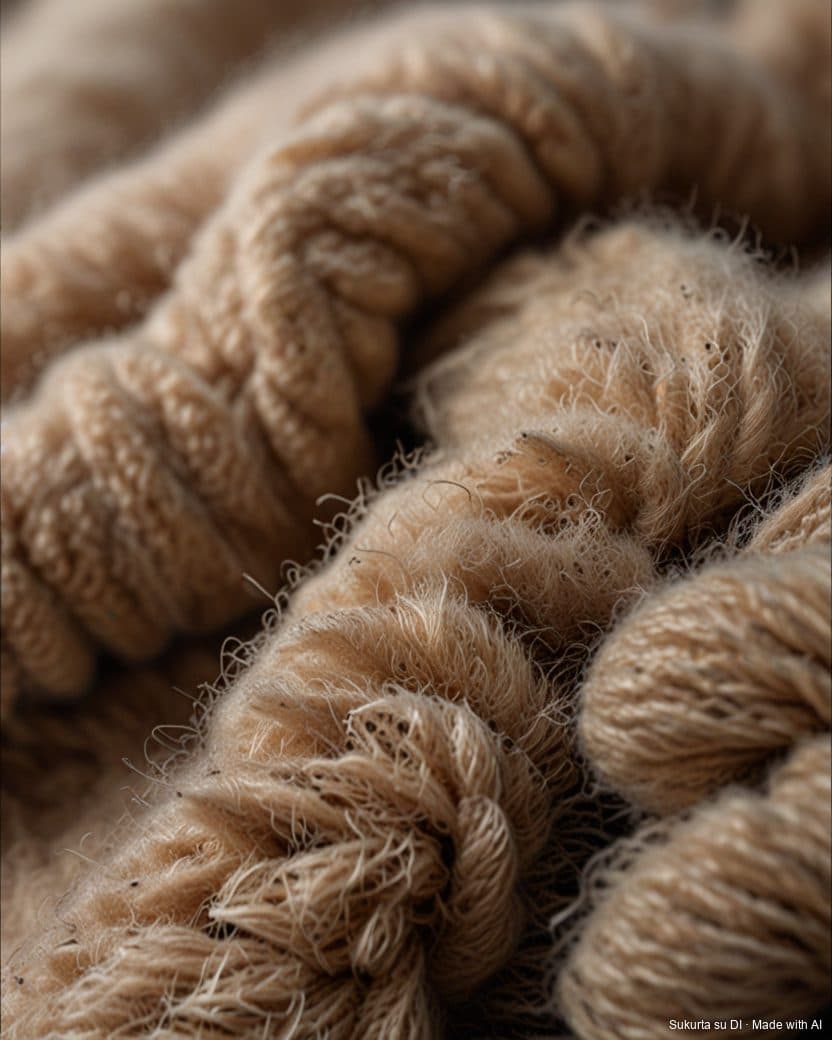
How it feels
Very soft, light and warm.
Season: Autumn and winter – it keeps you warm.
What it's used for
Sweaters, scarves, coats.
Cashmere shines in simple cuts: crew necks, roll necks, long cardigans. Pair it with silk and leather for a contrast of textures.
Pros
- Warmest for its weight
- Exceptionally soft
Cons
- Expensive
- Prone to pilling
- Needs gentle care
Care: a typical label
Always follow your own garment's label – blends and finishes change the care.
How it's constructed
Knit. One yarn interlocked in loops – so the fabric stretches sideways and creases less, but can stretch out.
A little history
The name comes from the Kashmir region; cashmere shawls became the rage in 19th-century Europe after Empress Joséphine adopted them.
How to recognise it
Animal fibres feel warm and springy – they bounce back when crushed. They burn smelling of hair and leave brittle black ash.
Sustainability
Biodegradable and long-lasting. Animal welfare matters: look for RWS (wool), the Good Cashmere Standard, and non-mulesed labels.
When buying
Rub the knit – if it pills at once, the fibres are short. '100%' or a high share of the natural fibre is warmer than acrylic blends.
Compare it
Frequently asked
01What is cashmere?
The soft undercoat of cashmere goats. The down is combed out in spring and separated from coarse guard hair. One sweater takes several goats' yearly down.
02Is cashmere a natural fabric?
Yes – a natural animal fibre.
03Does cashmere shrink?
Yes – cashmere shrinks in hot water and the dryer, especially as a knit. Wash at 30 °C and dry without heat.
04Is cashmere breathable?
Yes: cashmere lets air through and absorbs moisture – cool in the heat.