
Polyester fabric
Petroleum (PET plastic); recycled polyester comes from PET bottles. The polymer is melted and extruded into filaments. The world's most used fibre – more than half of all textile fibre produced.
Also called: PES, PET
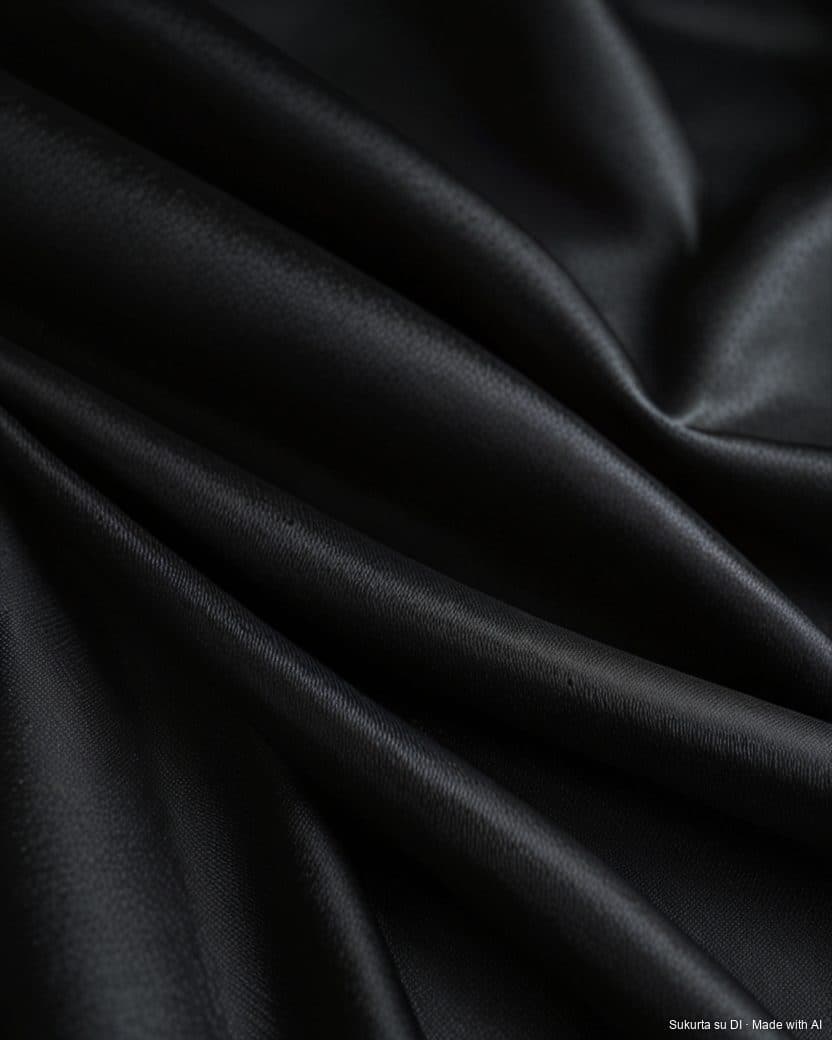
How it feels
Smooth and light; can feel warm and sweaty.
Season: Spring and autumn; next to skin it can feel stuffy in the heat.
What it's used for
Sportswear, dresses, coats, linings, fleece.
Great for pleated skirts (pleats stay), travel clothes, coats and sport. In summer next to skin, blends are better.
Pros
- Hardly creases or shrinks
- Quick-drying, durable and cheap
Cons
- Breathes poorly, holds odour
- Sheds microplastics in the wash
- Melts under a hot iron
Care: a typical label
Always follow your own garment's label – blends and finishes change the care.
How it's constructed
Plain weave. The simplest weave: each thread goes over one, under one. Strong, matte, the same on both sides, but creases more easily.
A little history
Polyester was invented in England in 1941; in the 1960s 'wash and wear' polyester suits were the height of modern.
How to recognise it
Synthetics are smooth, often slightly shiny, light and crease-free. They melt as they burn, smell of plastic and leave a hard bead.
Sustainability
Made from oil, don't biodegrade and shed microplastics in the wash. Recycled polyester (rPET) cuts oil use but not microfibre shedding; filter wash bags catch it.
When buying
Synthetics are great for sport, but for next-to-skin wear choose blends with natural or regenerated fibres – they breathe better and hold less odour.
Compare it
Frequently asked
01What is polyester?
Petroleum (PET plastic); recycled polyester comes from PET bottles. The polymer is melted and extruded into filaments. The world's most used fibre – more than half of all textile fibre produced.
02Is polyester a natural fabric?
No – it's a synthetic fibre made from petroleum.
03Does polyester shrink?
No – polyester hardly shrinks, unless washed or ironed very hot.
04Is polyester breathable?
Only so-so: polyester doesn't absorb moisture, it moves it along – fine for sport, less so next to skin on a hot day.